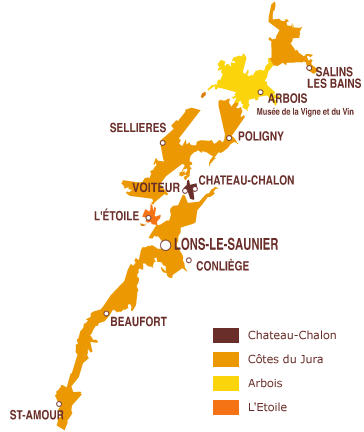

Passion Jura Vancouver – 2015 has come and gone, but not without leaving a lasting impression on us. The history of the wine making in this region dates back to as early as 80 A.D. and the soil that is present today dates back to the Meszoic era. The subsoil in the region is made up of Shale (a loose rock made up of clay and limestone.) Iridescent shale from the Triassic makes up the bottom layer, where wine-red beds of rock alternate with green, gray and beige strata. The diversity of the soil is said to date back to Jurassic times when dinosaurs roamed the earth.
Although we found a lot of differences in the wines of this region, due to the terroir found in the area, the one that stood out to us, with many similarities was the Vin Jaune (Golden wine).
This wine is produced from the Savagnin grape which is typical of the Jura. It does very well in the regions terroir and requires gray shale soil to grow successfully. The Savagnin grape is currently responsible for 22% of the crops grown in the region and the average yield is around 3,500 liters per hectare.
The wine is aged in casks much like sherry and a film forms over the wine known as a veil. It is aged in 228 liter casks, but unlike other wines of this style it is not topped up. The veil does not entirely protect it from oxygen.
It is then bottled in a Clavelin, which is a 62 centiliter bottle. This bottle size is the only special dispensation allowed under European regulations in this field. It is in fact, the only bottle allowed for the sale of Yellow Wine. It was adapted from what is know as the “English” bottle and in the 19th century it was under the name “65 cl English Clavelin.”

Stay tuned for more reviews from this region!